loading...
P1060994u.JPG
 
loading...
P1060995u.JPG
 
loading...
P1060923u.JPG
 
loading...
P1070132u.JPG


A few photos from our visit to 
      de Young Art Museum in
              Golden Gate Park

The Oakland Museum


Dispatch 6e

A visit to the USS Hornet

    9 Feb 2012


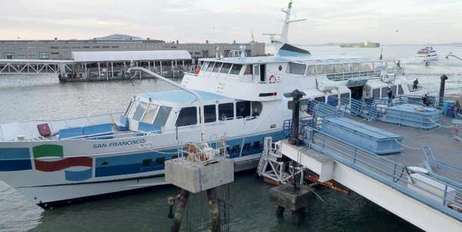
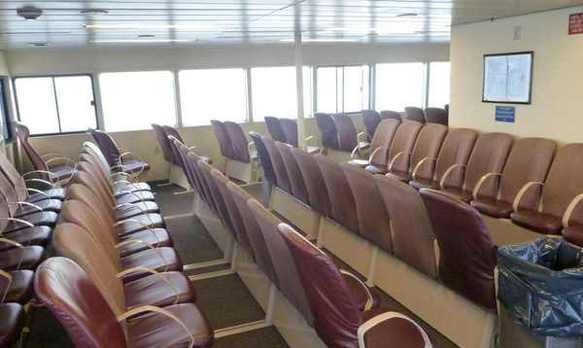
Since this was a trip to see a boat I thought it only fitting (and more scenic) to cross the bay by Ferry
 
loading...
P1070142u.JPG
 
loading...
P1070129u.JPG


I was moving against rush hour so the boat was almost empty on this leg. Many people were waiting on the Oakland side to board.


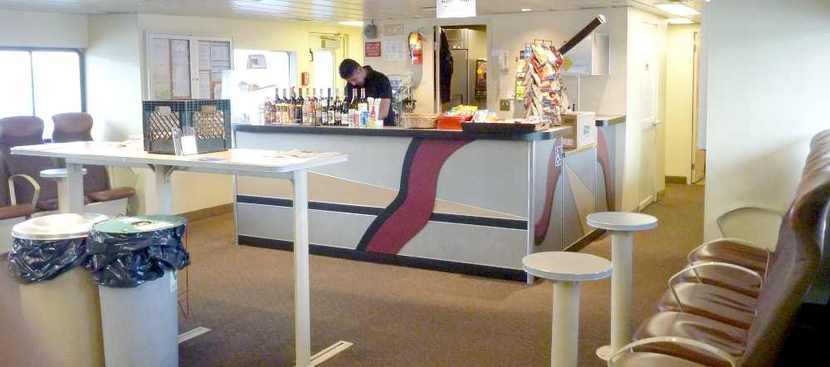
Being not much of a drinker I did not take advantage of the bar.
 
loading...
P1060898.JPG


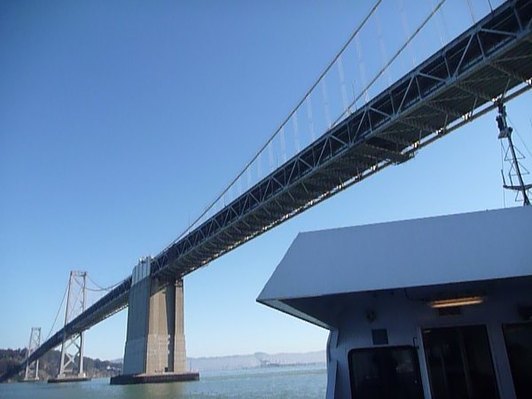
Passing under the Oakland Bridge.
 
loading...
P1060910u.JPG


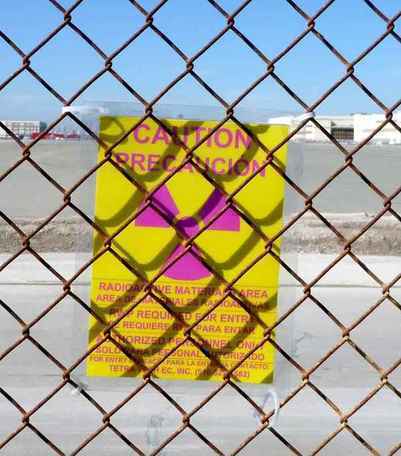
Once off the Ferry I had a fairly long walk to the dock (40 Min). I passed these interesting signs on a fenced in area of the yard.
 
loading...
P1070114u.JPG
 
loading...
P1070114u2.JPG


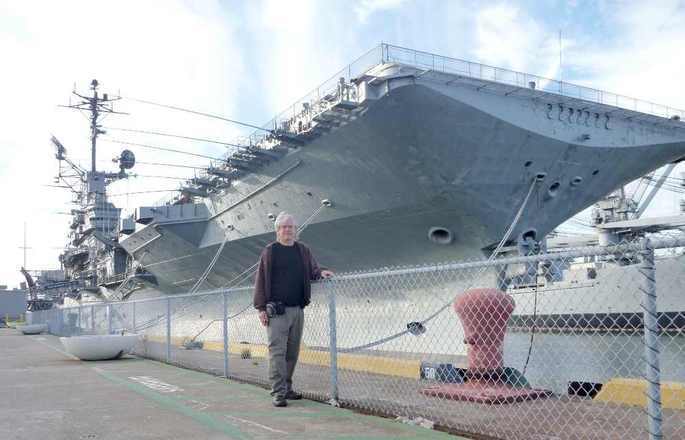
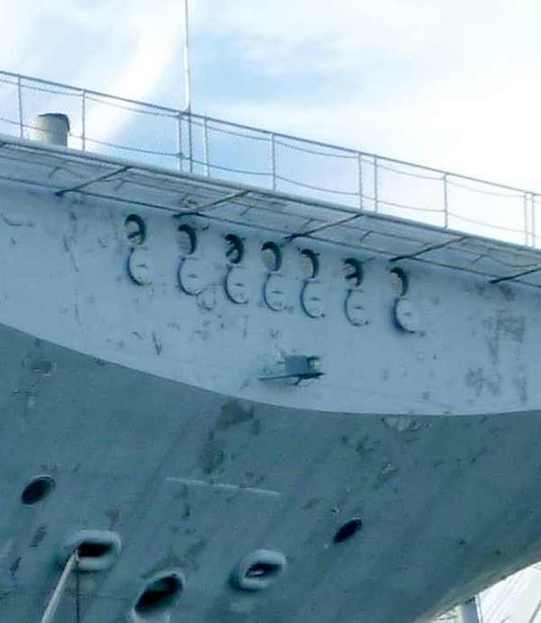
Here is the thing I came to see. Note the 7 portholes on the very front (zoomed in below) I will mention them later.
 
loading...
P1060936u.JPG
 
loading...
P1060921u.JPG
 
loading...
P1060959u.JPG
 
loading...
P1060954u.JPG
 
loading...
P1060980u.JPG
 
loading...
P1060984u.JPG


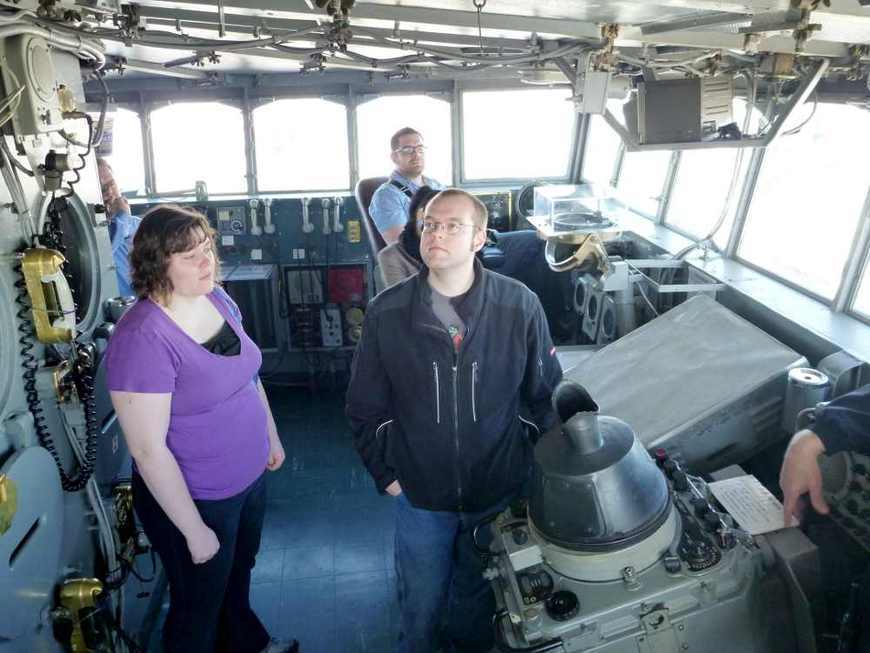
The Bridge is behind a bulkhead at the rear of the area where the captain sits. So the helmsman is actually behind (and more protected) than the captain. The helmsman can see the captain through those portholes in the photo.


loading...
P1060986u.JPG


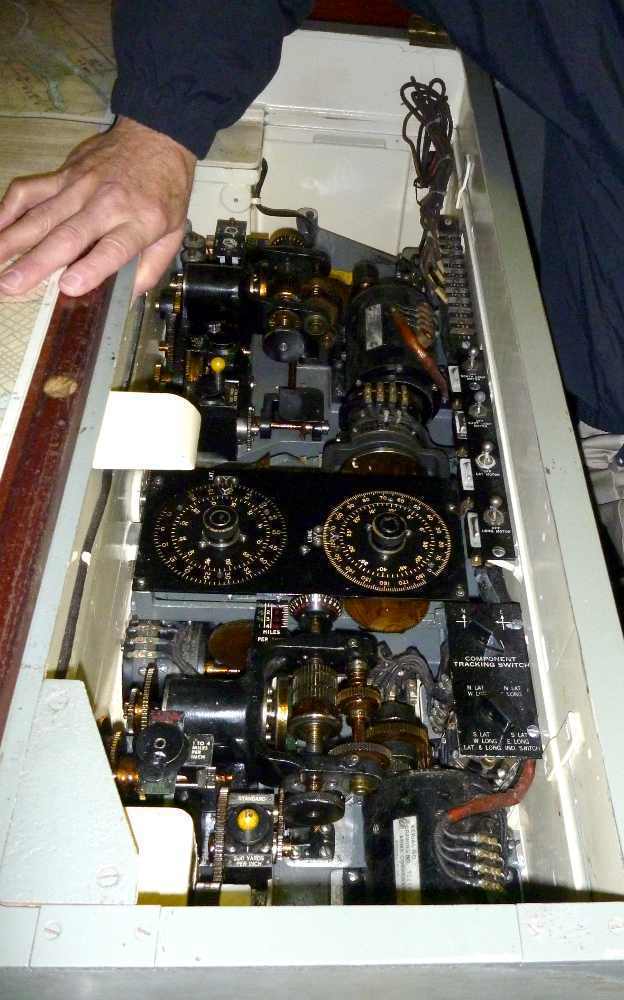
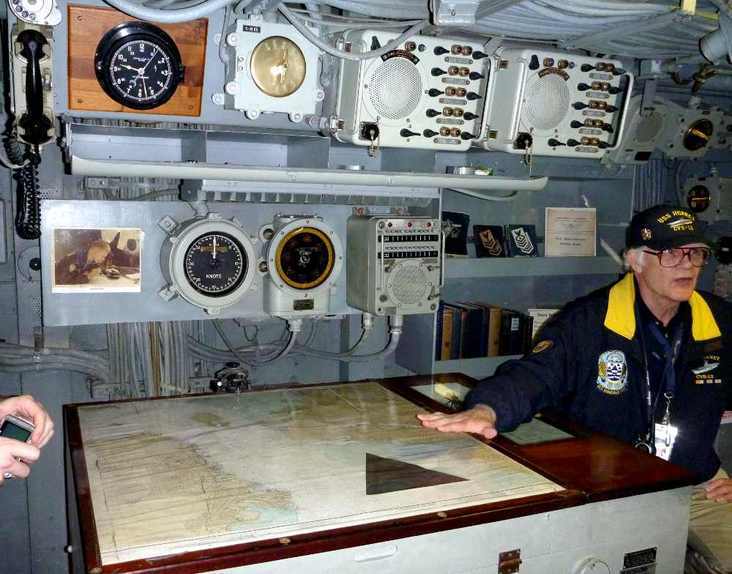
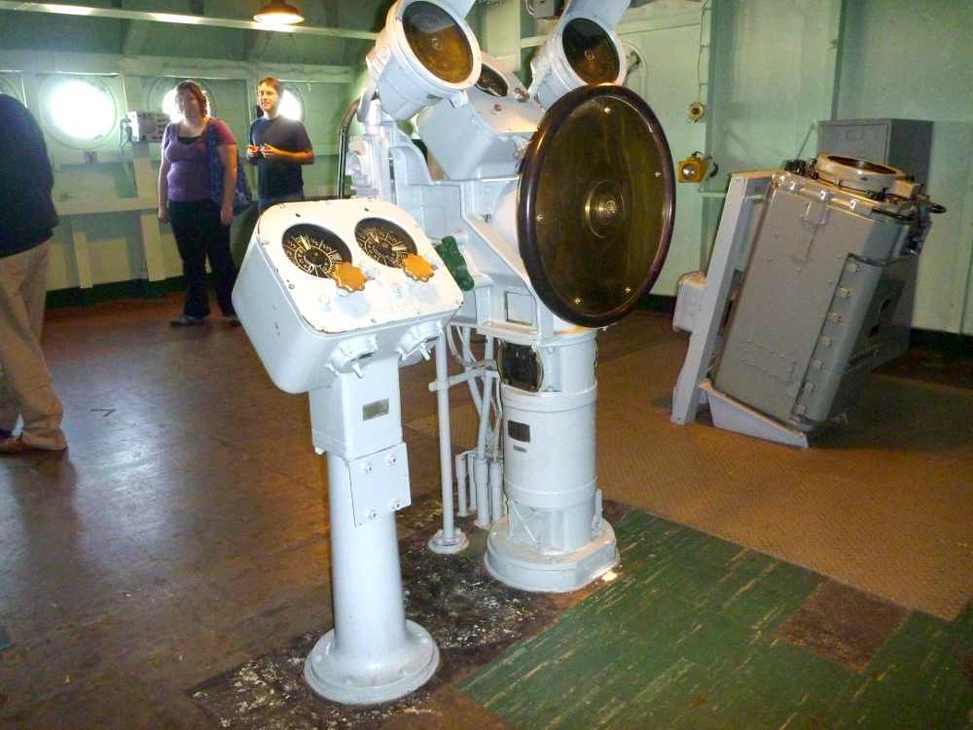
The Docent pointed out this device and called it an Analog Computer
 
loading...
P1060973u.JPG
 
loading...
P1060975u.JPG
 
loading...
P1060974u.JPG
 
loading...
P1070051u.JPG
 
loading...
P1070044u.JPG


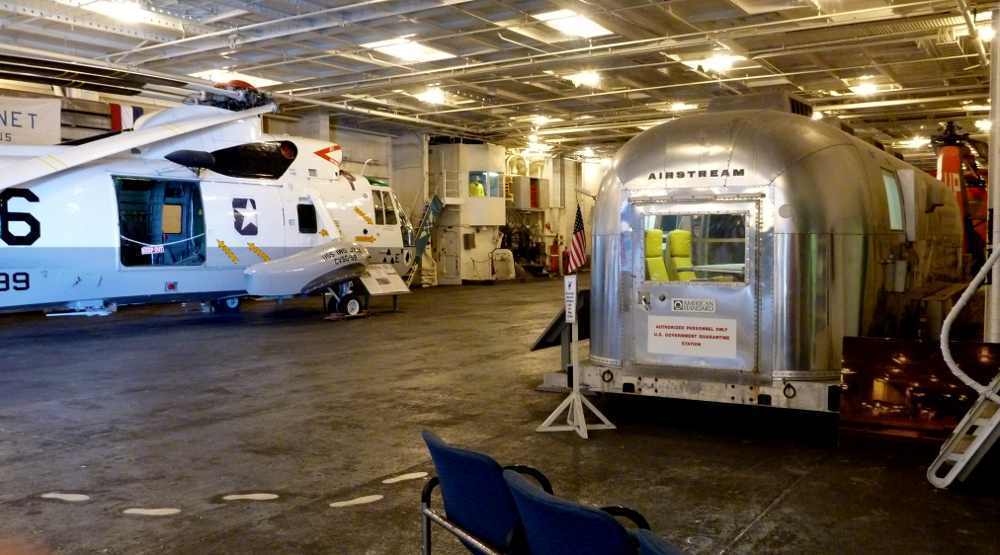
The Hornet had the honor of recovering the Apollo 11 Capsule and crew after the first Moon mission.
 
loading...
P1070008u.JPG


You may remember this if you are old enough:

On the hanger deck is the actual isolation lab (an air stream trailer) used by the Apollo 11 astronauts. The window to the right is the same one President Nixon stood at to greet the astronauts. The footprints painted on the floor show the path they walked to enter isolation, carefully positioned from the photographic record. The helicopter to the left is the same type (but not the actual one used) to recover the capsule.


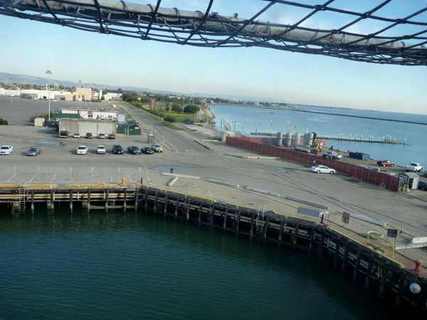
At the beginning I mentioned 7 portholes in the front of the ship. To the right the view from one of them.

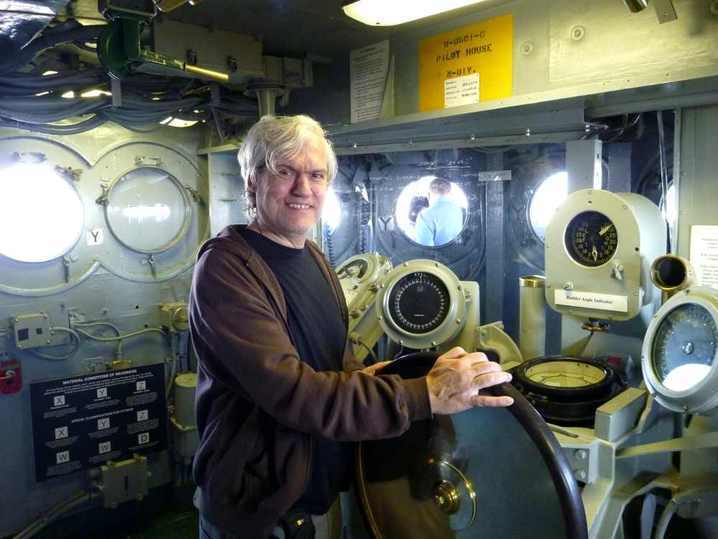
Below: A secondary helm, complete with radar (gray box to the right) engine speed telegraph and naturally a pilot wheel. You can see a few of the seven porthole in the background. The boat could be driven from here if the bridge were destroyed.

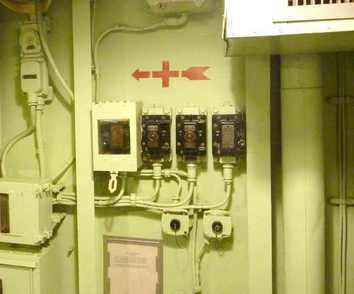
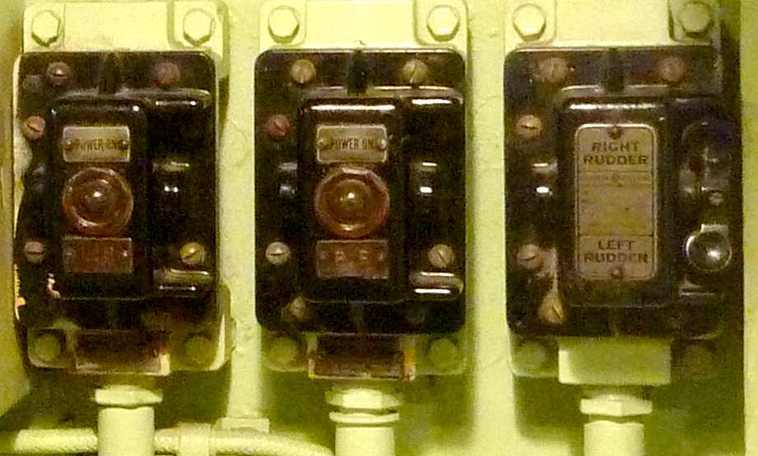
Turning the steering wheel does not move the rudder directly, it sends signals to an electric motor that moves the giant rudder. 1940s fly by wire.
 
loading...
P1070093u.JPG
 
loading...
P1070091u.JPG
 
loading...
P1070075u.JPG


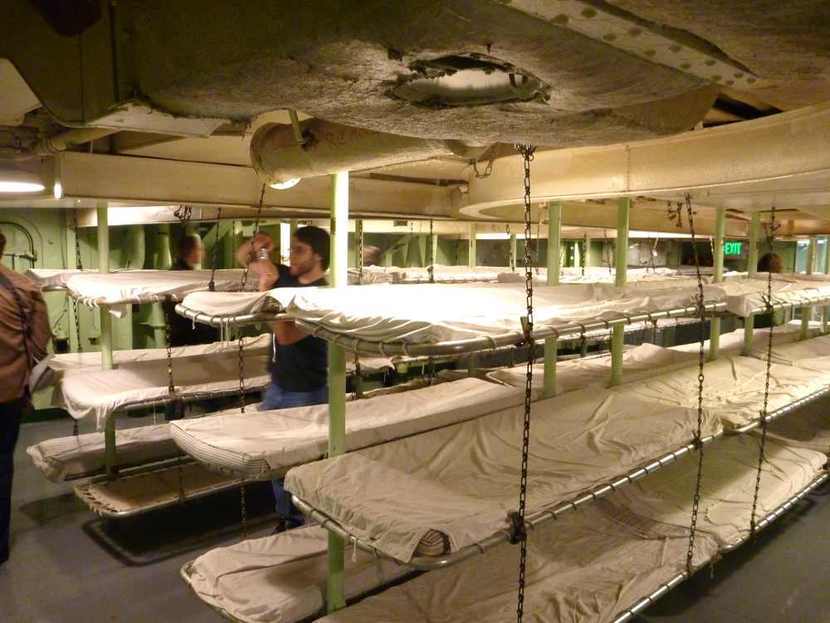
Below: This bunk room had another interesting feature, probably because it was relatively well protected. These little controls along one wall could also be used to steer the ship if the other helm controls were destroyed. See the zoom in on right. 

We were told the rudder could even be turned by hand. We did not get to see the control but there is a large wheel somewhere and it takes many turns and heavy work to move the rudder just one degree using that method.
 
loading...
P1070076u.JPG
 
loading...
P1070076u2.JPG
 
loading...
P1070137u.JPG


A few photos from our visit to 
      de Young Art Museum in
              Golden Gate Park


The Oakland Museum


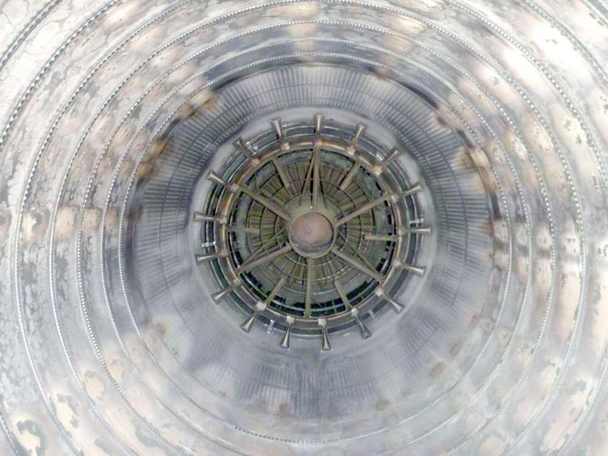
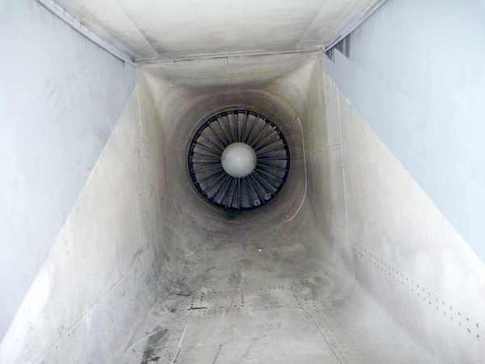
Did you ever wonder what you would see if you poked your head into the intake of a jet engine. Well I did that to one of the war birds on deck and above is what I saw. To the left, the exhaust side.


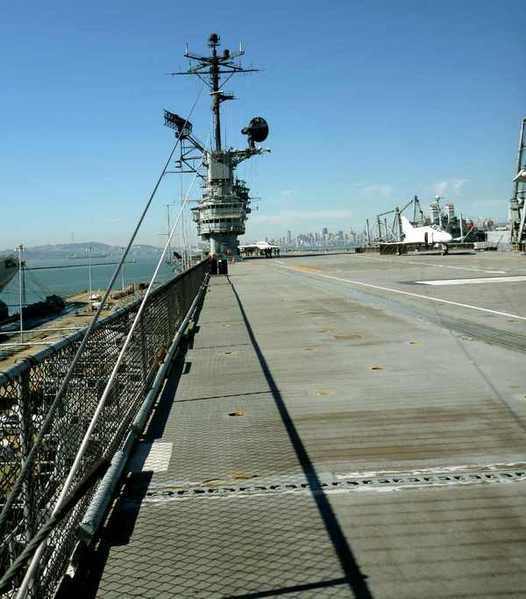
This area is not just home to flower children; it also has some pretty impressive military hardware around. The first I was scheduled to see was the USS Hornet. This is a WWII era aircraft carrier quite well preserved. It was rescued from the scrap yard and is now a floating museum in the navy yard on the Oakland side of the bay. 


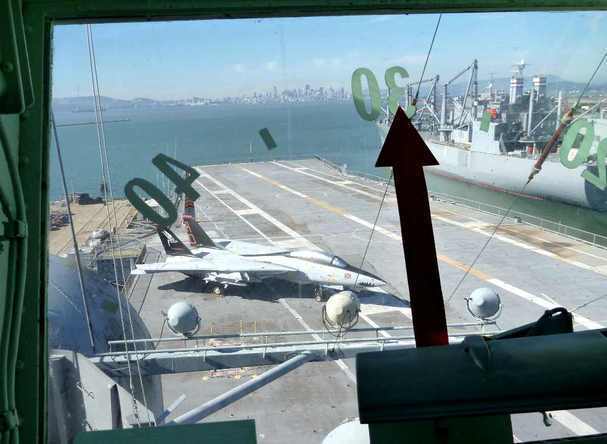
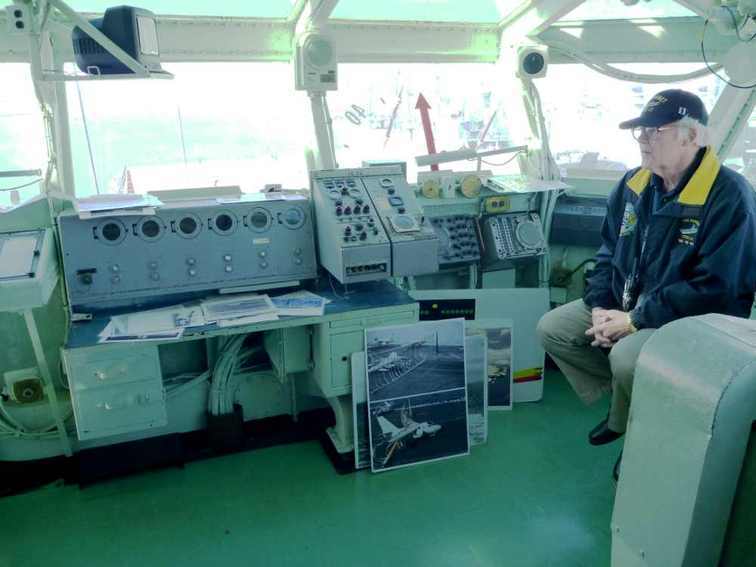
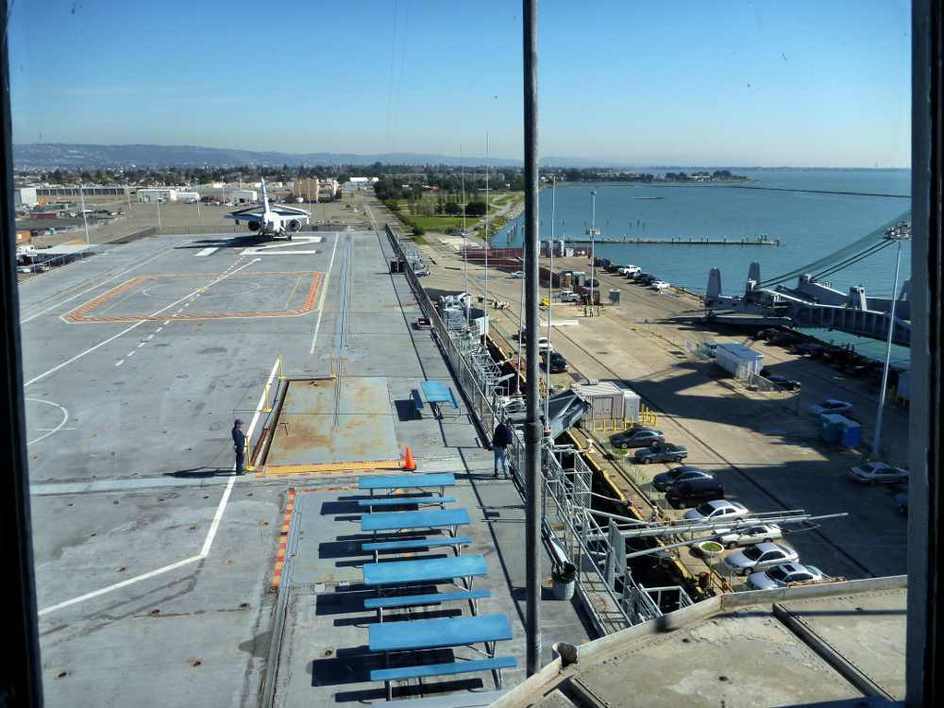
A docent in the air traffic controller's chair. This was a pretty small room.


The plane whose engine I looked at seen from the air traffic controller's window.


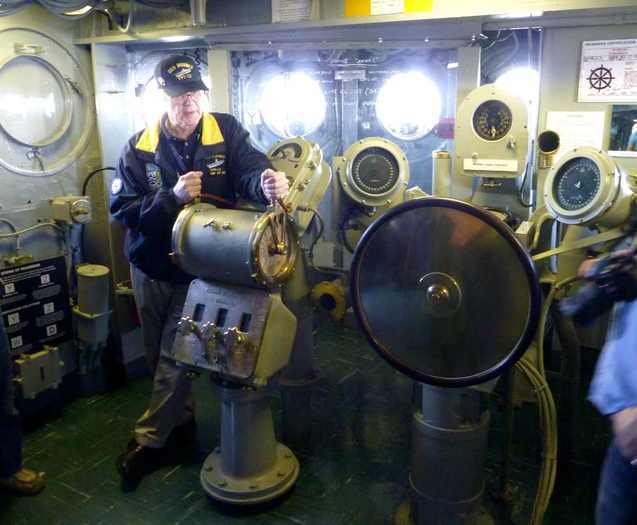
On the other side of the island is where the helmsman steers the boat. The docent has his hands on the "telegraph" used to signal the engine room for a given speed. The three silver knobs below can be used to call for an exact engine RPM setting.  To the right is the steering wheel.

Steady as she goes Mr. Sulu.


The guy in the corner is in the captain's chair. The helmsman station is behind the woman, on the other side of the porthole.


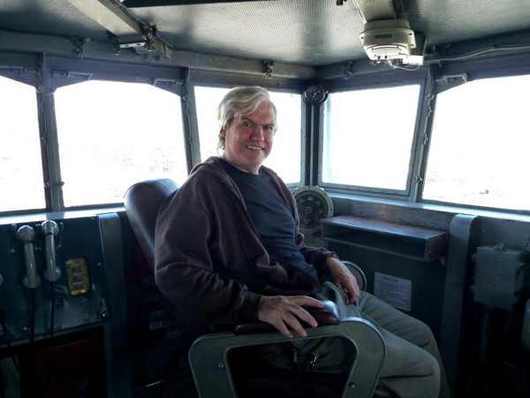
I tried out the captain's chair myself.


The view from the chair is below.


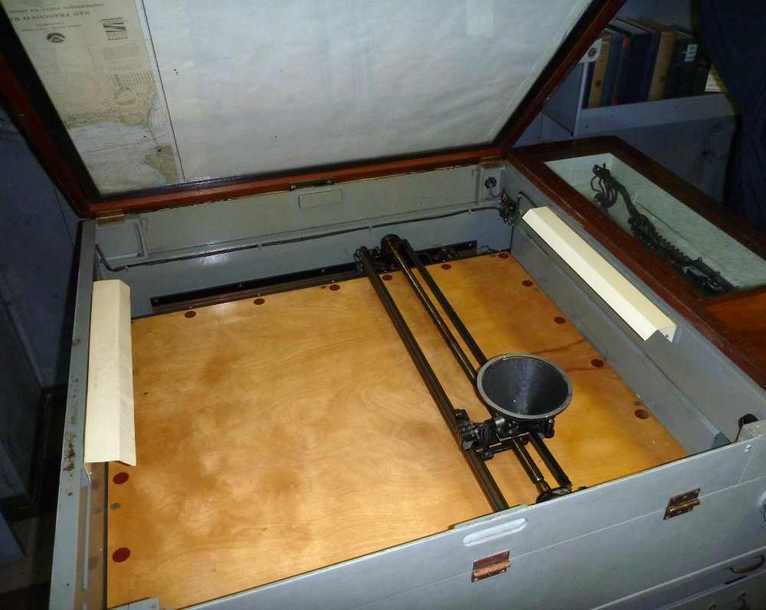
And indeed it is a dead reckoning computer. It would keep continuous track of the ship's position based on direction and speed. An X-Y plotter (below) would project a spot of light from below onto a chart placed on the glass. It could not compensate for wind or water currents so they would correct it daily using an old fashion sextant (weather permitting).


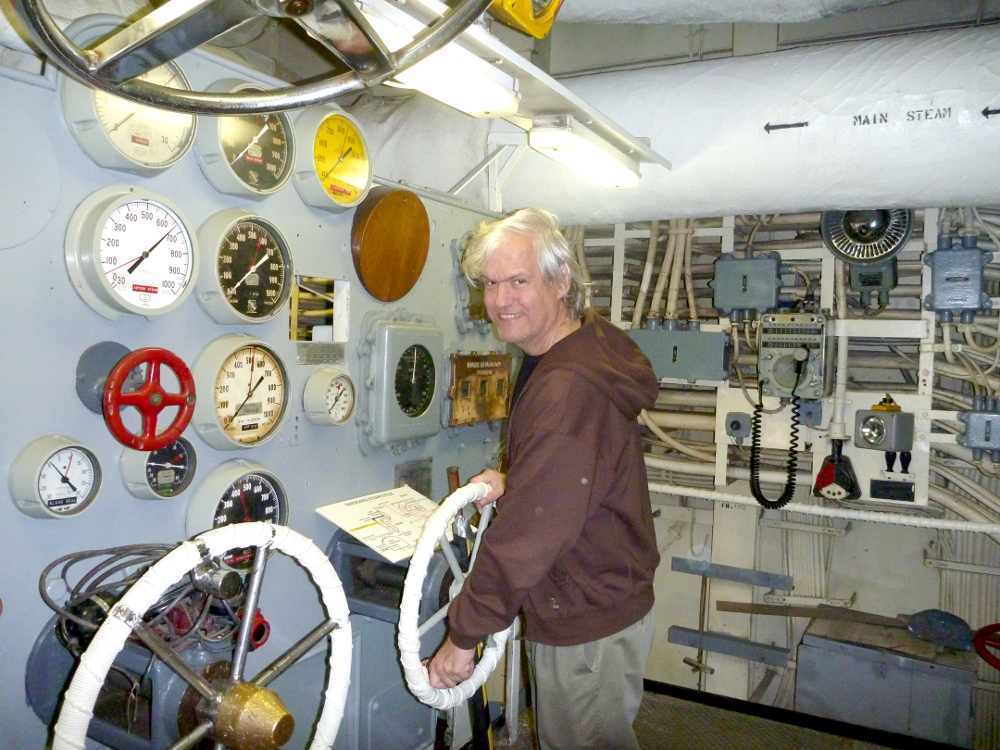
Remember the “telegraph” used by the helmsman to signal for engine speed? That signal comes to the engine room where the crew operates the engines to achieve the desired speed. The thing that looks like a steering wheel is actually one of the valves used to control the speed of one of four engines.


The mechanism is cool but the job was awful. Imagine day after day of incredibly brutal heat and roaring noise in this area.


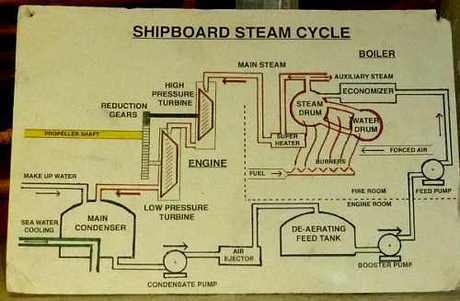
Below: One of the simpler diagrams they had around.


Right: This is one of the larger bunk rooms but you could find bunks almost anywhere with little regard to comfort and none to privacy. The navy typically had you sleep near your work station. We saw engine mechanics bunks just a few yards from the huge diesel generator they tended. Unimaginable how one could sleep when they were running.


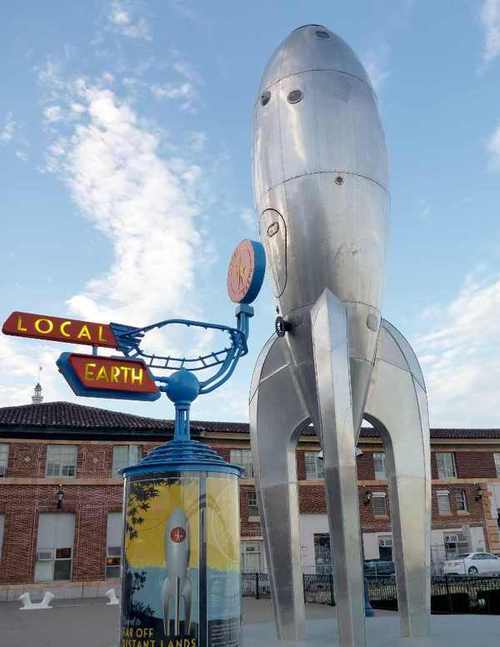
And here is the spaceship. Oh, wait, there was a moon capsule but not a full blown spaceship on the hornet. This is a piece of outdoor art I saw when I got back to the Ferry Station.


But you can see the pictures in higher resolution AND many more on my Web Album.


Try the SLIDESHOW function. Three vertical dotx, upper right corner.

Then press F11 for full screen mode.